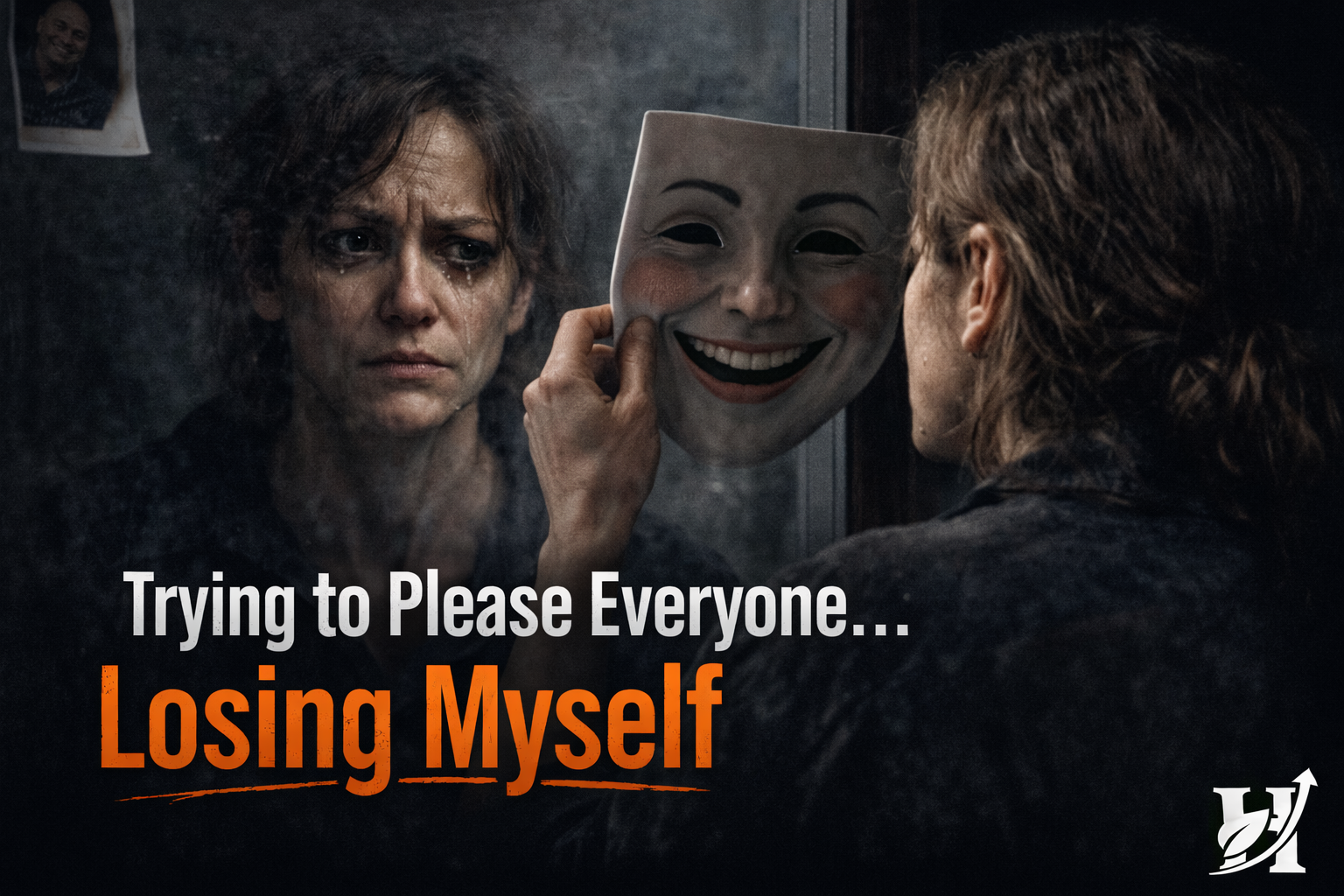
Introduction: When “Being Nice” Becomes Self-Destruction
People often praise kindness, agreeableness, and the ability to always be there for others. These qualities are seen as strengths, and in many ways, they are. But there is a point where kindness stops being healthy and starts becoming harmful. That point is where people-pleasing begins.
People-pleasing is not just about being helpful. It is a pattern of behavior where you consistently ignore your own needs to gain approval, avoid rejection, or maintain peace. Over time, this habit becomes deeply ingrained, shaping your decisions, your relationships, and even your sense of self.
At first, it feels like the right thing to do. You feel appreciated. You feel accepted. But slowly, something begins to shift. You start to feel drained, overwhelmed, and disconnected from who you really are. You begin living a life that looks good from the outside but feels empty on the inside.

👉 Related read: Why Your “Why” Matters More Than Your Workout Plan
What Is People-Pleasing, Really?
People-pleasing goes beyond occasional compromise. It is a repeated pattern of putting others first at the expense of your own well-being. It becomes automatic, almost like a reflex.
You may notice it in small, everyday actions. Saying yes when you want to say no. Avoiding difficult conversations. Apologizing even when you’ve done nothing wrong. Seeking reassurance before making decisions.
Over time, these behaviors stop feeling like choices and start feeling like obligations. You begin to believe that this is just who you are. But the truth is, people-pleasing is not your identity. It is a learned behavior, shaped by past experiences and reinforced over time.
👉 Internal link: Unlocking Consistency: Beyond Motivation
The Hidden Psychology Behind People-Pleasing
People-pleasing is often rooted in early emotional experiences. Many people learn from a young age that love, approval, or safety is conditional. You may have been praised for being “good,” quiet, or obedient. You may have learned that conflict leads to rejection or discomfort.
As a result, your brain adapts. It begins to associate pleasing others with safety and acceptance. This becomes your default mode of operation.
Even when you grow older and your environment changes, the pattern remains. You continue to seek approval, avoid conflict, and prioritize others—not because you have to, but because your mind believes you need to.
This is why breaking free feels so difficult. You are not just changing behavior—you are rewiring a belief system that has been with you for years.
💔 The Mental Health Cost of People-Pleasing


1. Chronic Anxiety and Overthinking
When your self-worth is tied to how others perceive you, your mind becomes restless. You replay conversations in your head, analyze every word you said, and constantly worry about how others feel about you.
This creates a loop of anxiety that is hard to escape. You are always trying to manage people’s perceptions, which is something you can never fully control. Over time, this mental strain builds up, leaving you feeling overwhelmed and emotionally exhausted.
2. Emotional Burnout and Exhaustion
People-pleasing often leads to giving more than you receive. You invest your energy into helping others, meeting expectations, and maintaining harmony but rarely take time to recharge yourself.
At first, it may not feel like a problem. But gradually, you begin to feel drained. Tasks that once felt easy start to feel overwhelming. You lose motivation not because you are lazy but because you are emotionally exhausted.
Burnout is not always caused by work. Sometimes, it is caused by constantly neglecting your own needs.
3. Loss of Identity
When you spend so much time adapting to others, you begin to lose touch with yourself. You become flexible, agreeable, and easy to be around—but at the cost of your own identity.
You may find yourself unsure of what you truly want, what you believe in, or even what makes you happy. This confusion can create a deep sense of emptiness, as if you are living someone else’s life instead of your own.
4. Suppressed Emotions and Inner Tension
Avoiding conflict often means suppressing your true feelings. You may choose silence over honesty to keep the peace. But those emotions do not disappear—they build up over time.
Eventually, they surface in unexpected ways. You may feel irritable, frustrated, or emotionally overwhelmed. This internal tension is a sign that your needs are not being met.
5. Low Self-Worth and Dependency
People-pleasing reinforces the belief that your value depends on what you do for others. This creates a reliance on external validation.
When others approve of you, you feel good. When they don’t, you feel inadequate. This constant need for validation makes your self-worth unstable and dependent on factors outside your control.
How to Break Free from People-Pleasing
Breaking free from people-pleasing does not mean becoming selfish. It means creating a healthier balance between caring for others and caring for yourself.
1. Redefine Kindness
True kindness includes you. It means being honest, setting boundaries, and respecting your own needs.
2. Practice Saying “No”
Start small. You don’t need long explanations. A simple “I can’t do that right now” is enough.
3. Build Self-Awareness
Pause before agreeing to something. Ask yourself if you truly want to do it or if you are acting out of fear.
4. Set Boundaries
Boundaries protect your mental health. They define what you are willing to accept and what you are not.
5. Rebuild Your Self-Worth
Shift your focus inward. Learn to validate yourself instead of relying on others.
👉 Must read: Discipline Over Motivation: The Secret to Long-Term Fitness Results
Final Reflection
People-pleasing may feel safe, but it comes at a cost. It drains your energy, weakens your identity, and affects your mental health in ways that are easy to overlook.
Choosing yourself is not selfish. It is necessary. It allows you to live a life that is aligned with who you truly are, not who others expect you to be.
Ebook Funnel (The Discipline Reset)
🎯 Ready to Take Control of Your Life?
If you’re tired of seeking validation, struggling with discipline, or feeling stuck, then it’s time for a change.
The Discipline Rest will help you
- Build strong daily habits
- Develop self-discipline
- Stop relying on motivation
- Take full control of your life
👉 Get your copy now for ₦3,000 ($3.50)
👉 Start becoming the version of yourself you respect
FAQ: People-Pleasing & Mental Health
1. Is people-pleasing a bad thing?
Not entirely. Being kind and considerate is positive, but when it comes at the expense of your mental health, it becomes harmful.
2. Why do I feel guilty saying no?
Because your mind associates approval with safety. Saying no feels like risking rejection, even when it’s necessary.
3. Can people-pleasing cause anxiety?
Yes. Constantly worrying about others’ opinions creates chronic anxiety and overthinking.
4. How do I stop people-pleasing without hurting others?
Start with honesty and respect. You can set boundaries without being rude or aggressive.
5. How long does it take to change this habit?
It depends on consistency. With awareness and practice, you can start seeing changes within weeks.
Join the Conversation
Have you ever struggled with people-pleasing?
- What situations make it hardest for you to say no?
- Have you started setting boundaries?
- What changed for you when you began choosing yourself?
Drop your thoughts in the comments or share this with someone who needs it.
Let’s grow together. 🌱
Leave a Reply