
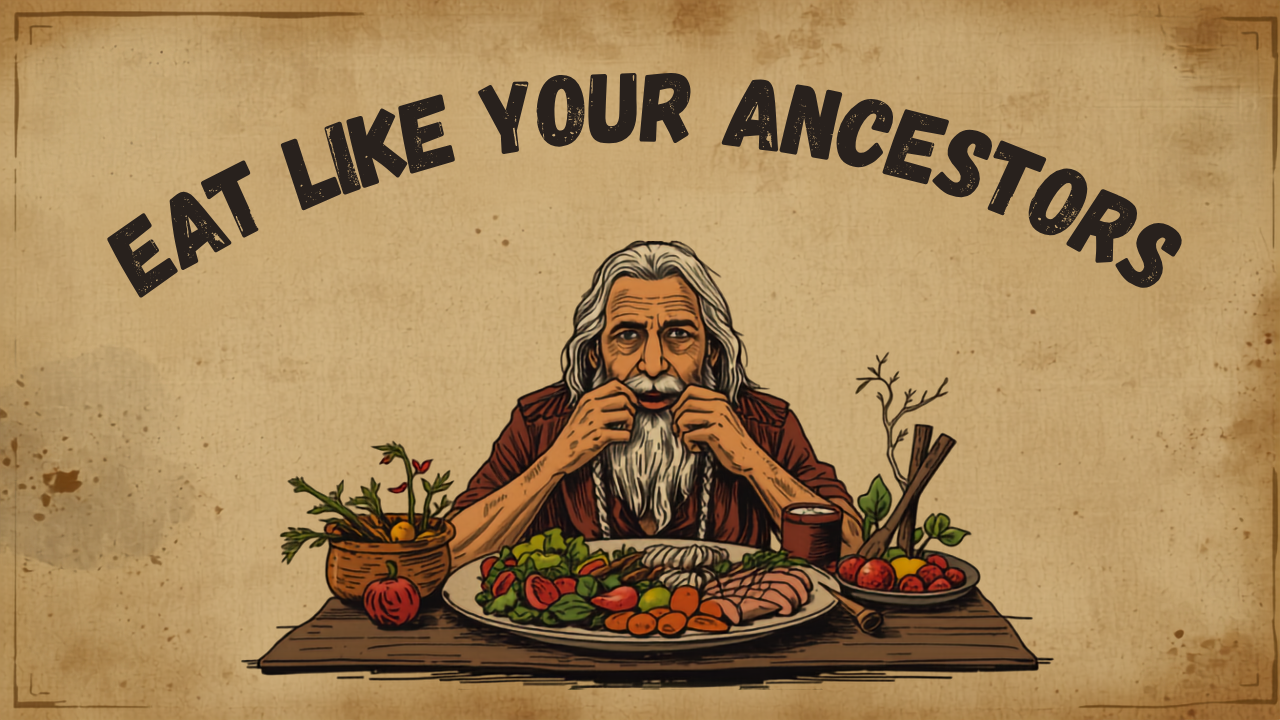
For more than 99% of human history, our ancestors lived without supermarkets, refrigerators, food delivery apps, refined sugar, or ultra-processed snacks. Yet in just a few generations, our food environment has changed more dramatically than our biology ever could. The question is no longer whether food has changed, but whether our bodies have been able to keep up.
As the first rays of sunlight broke over the African savannah nearly 50,000 years ago, a small family began another ordinary day of survival. There were no kitchen cupboards to open, no packaged breakfast cereals waiting on a shelf, and certainly no drive-through restaurants serving meals within minutes. Every calorie required effort. Some members of the group searched for edible roots, berries, nuts, and wild fruits, while others tracked animals that might provide enough protein to feed everyone for several days. Success was never guaranteed. Some days ended with abundance, while others ended with very little food at all. Their bodies evolved to survive this uncertainty, developing remarkable biological systems that stored energy whenever food was plentiful and conserved it whenever food became scarce.
Fast forward to the twenty-first century, and the contrast is extraordinary. Today, many people wake up and consume more calories before leaving home than some hunter-gatherers might have eaten in an entire day. Food is available twenty-four hours a day, often requiring little more than pressing a button on a smartphone. Shelves overflow with brightly packaged products engineered to maximize taste, convenience, and shelf life. Meals no longer need to be hunted, gathered, or even cooked. While this transformation represents one of humanity’s greatest technological achievements, it has also introduced a fascinating biological dilemma. Our environment has changed at breathtaking speed, but evolution operates over thousands of generations. The body living inside modern society is still remarkably similar to the body that once depended on hunting, gathering, climbing, walking, and periods of food scarcity to survive.
This growing mismatch between ancient biology and modern living has become one of the most important conversations in nutritional science. Researchers increasingly believe that many of today’s health challenges—including obesity, type 2 diabetes, cardiovascular disease, and metabolic dysfunction—cannot be understood by examining calories alone. Instead, they must also be viewed through the lens of evolution. Our genes were shaped in an environment where movement was unavoidable, meals were unpredictable, and food was largely unprocessed. Modern lifestyles, however, provide constant access to inexpensive, highly palatable foods while demanding far less physical activity than at any other point in human history. Understanding this evolutionary mismatch does not mean romanticizing the past or attempting to recreate prehistoric diets. Rather, it offers valuable insight into why the human body responds to modern nutrition the way it does and how we might make healthier choices by working with our biology instead of against it.
Throughout this article, we will explore what evolution genuinely teaches us about nutrition, separate scientific evidence from popular myths surrounding ancestral eating, examine how the brain still responds to food as though scarcity were just around the corner, and discover practical lessons that can improve health without requiring anyone to abandon the conveniences of modern life. The goal is not to eat exactly as our ancestors did, because that would be neither practical nor scientifically accurate. The goal is to understand why the body developed the nutritional preferences it did and how that knowledge can help us thrive in today’s vastly different world.
There Was Never One “Caveman Diet.”
One of the most common misconceptions about ancestral nutrition is the belief that early humans followed a single universal diet. Popular culture often imagines prehistoric people eating large quantities of meat around campfires while avoiding grains, dairy, or carbohydrates altogether. Although this image has become deeply embedded in modern diet culture, anthropology paints a much more fascinating and complex picture. Human beings evolved across vastly different environments, ranging from tropical forests and grasslands to deserts, mountains, coastlines, and icy northern regions. Naturally, the foods available differed dramatically depending on geography, climate, and season.
Communities living near rivers and coastlines often relied heavily on fish and shellfish rich in omega-3 fatty acids. Others consumed large quantities of fruits, tubers, seeds, nuts, legumes, insects, or wild game depending on what their environments provided. Seasonal variation also played a major role. During certain months, fruit might be abundant, while other seasons required greater dependence on roots or hunted animals. Rather than following one ideal nutritional pattern, humans survived because they were remarkably adaptable. Flexibility—not dietary rigidity—became one of our greatest evolutionary advantages.
This adaptability remains one of humanity’s defining biological characteristics today. The digestive system possesses an extraordinary capacity to utilize a wide variety of foods while extracting nutrients necessary for survival. From an evolutionary perspective, diversity was an advantage because it reduced dependence on any single food source. Modern nutritional science increasingly supports this principle, encouraging diets rich in diverse whole foods rather than narrow eating patterns that unnecessarily eliminate entire food groups without medical justification. Perhaps the greatest lesson our ancestors teach us is not what specific foods they consumed but how adaptable healthy eating can truly be.
Why Your Brain Still Thinks Food Is Scarce
Although supermarkets remain fully stocked and food delivery can arrive within minutes, parts of the human brain continue operating according to ancient survival principles. Thousands of years of evolution taught the brain that food shortages were common and unpredictable. As a result, consuming calorie-dense foods whenever they became available improved the chances of survival during future periods of scarcity. Individuals whose brains encouraged eating energy-rich foods often survived long enough to pass those biological tendencies to future generations.
This evolutionary strategy worked remarkably well in prehistoric environments. Unfortunately, modern society presents a completely different challenge. Instead of occasional access to calorie-rich foods, many people are surrounded by them constantly. Highly processed snacks, sugary drinks, desserts, and convenience foods are available almost everywhere, often marketed through sophisticated advertising specifically designed to capture attention and stimulate cravings. The brain responds to these foods using the same reward systems that once encouraged survival, releasing dopamine and reinforcing behaviors associated with consuming energy-dense meals.
This helps explain why resisting unhealthy food often feels far more difficult than simply lacking willpower. The struggle is not merely psychological; it is biological. Your brain evolved to encourage behaviors that once protected your ancestors from starvation. The challenge today is that those same biological systems now operate within an environment overflowing with inexpensive, highly rewarding foods. Understanding this reality replaces self-blame with self-awareness. Instead of viewing cravings as evidence of weakness, we begin recognizing them as ancient survival mechanisms encountering a modern food environment unlike anything evolution prepared them for.
Movement Was Never Exercise—It Was Simply Life
Perhaps one of the greatest differences between our ancestors and modern society has nothing to do with food itself. It has everything to do with movement. For prehistoric humans, obtaining food required physical effort. Hunting demanded endurance, patience, strength, and coordination. Gathering edible plants meant walking long distances, climbing uneven terrain, digging roots from the ground, and carrying heavy loads back to camp. There were no gym memberships, fitness trackers, or scheduled workout sessions because movement was naturally woven into everyday survival. Physical activity was not something people deliberately planned; it was an unavoidable consequence of living.
Modern life has dramatically altered this relationship. Today, it is entirely possible to spend an entire day sitting—working on a computer, driving to meetings, ordering groceries online, and relaxing in front of a television—while still consuming more calories than the body requires. Food has become increasingly convenient, while movement has become increasingly optional. This imbalance represents one of the clearest examples of what scientists call an evolutionary mismatch, where ancient biological systems encounter environments vastly different from those in which they evolved.
This does not mean we should attempt to imitate the exact physical activities of hunter-gatherers. Instead, it reminds us that the human body was designed for frequent movement rather than prolonged inactivity. Walking, lifting, climbing stairs, carrying groceries, gardening, playing with children, and regular exercise all provide biological signals remarkably similar to those our ancestors experienced naturally. When movement once again becomes part of daily living rather than an occasional obligation, nutrition and physical activity begin working together in the way evolution originally intended.
The Hidden Advantage of Seasonal Eating
Imagine standing in a forest thousands of years ago during late summer. Trees are heavy with fruit, wild berries are abundant, and edible plants flourish after months of favorable weather. Several months later, however, that same landscape looks entirely different. Many fruits have disappeared, plants have withered, and survival depends upon completely different food sources. Seasonal eating was not a lifestyle trend; it was simply reality.
This natural rhythm exposed our ancestors to tremendous dietary diversity throughout the year. Different seasons supplied different vitamins, minerals, antioxidants, fibers, and healthy fats, creating nutritional variety that supported overall health. Seasonal fluctuations also prevented dependence on a limited selection of foods because nature itself encouraged continual dietary change.
Today’s supermarkets have almost eliminated these natural rhythms. Strawberries, grapes, avocados, tomatoes, and countless other foods are available throughout the year regardless of their natural growing seasons. While this remarkable convenience has reduced food insecurity and expanded dietary options, it has also distanced many people from understanding where food comes from and how seasonal diversity once shaped nutritional patterns.
There are significant benefits to reconnecting with seasonal eating whenever practical. Produce harvested during its natural season is often fresher, more flavorful, and in many cases more nutrient-rich because it spends less time in transportation and storage. Seasonal eating also encourages greater dietary variety, exposing the body to a broader range of protective plant compounds instead of relying on the same limited selection of foods every week. Diversity, not perfection, remains one of the greatest nutritional lessons evolution continues teaching us.
Why We Need To Learn From Evolution
Understanding human evolution provides several important advantages for modern nutrition without requiring us to abandon scientific progress. First, it helps explain why the body often responds so strongly to highly processed foods. Instead of blaming ourselves for occasional cravings, we recognize that ancient survival mechanisms are interacting with an environment they were never designed to navigate. This understanding encourages compassion alongside responsibility.
Second, evolutionary thinking shifts the focus away from temporary dieting and toward long-term biological health. Rather than asking which diet is currently popular, individuals begin asking whether their daily eating patterns resemble the nutritional conditions under which the human body evolved to function best. This often leads to greater emphasis on whole foods, dietary variety, fiber, healthy fats, quality protein, and minimally processed ingredients.
Another important benefit is sustainability. Extreme diets frequently fail because they ignore the remarkable flexibility of human biology. Our ancestors survived precisely because they adapted to changing environments rather than depending upon one rigid eating pattern. Likewise, sustainable nutrition today allows room for cultural traditions, personal preferences, family meals, and occasional indulgences without abandoning healthy principles altogether.
Perhaps the greatest advantage is perspective. Nutrition stops becoming a constant battle against the body and instead becomes a partnership with it. Every healthy meal supports biological systems refined through hundreds of thousands of years of human evolution, allowing the body to perform the tasks it was designed to perform.
What Evolution Cannot Teach Us
While evolution offers valuable insights, it is equally important to recognize its limitations. One of the greatest mistakes in modern nutrition is assuming that because something is ancient, it must automatically be healthier. This belief, sometimes called the appeal to nature, ignores the extraordinary benefits of modern science.
Our ancestors faced enormous challenges that few people would willingly accept today. Food shortages were common, life expectancy was significantly shorter, infant mortality was much higher, infections frequently proved fatal, and nutritional deficiencies often developed during prolonged periods of scarcity. Modern agriculture, refrigeration, food safety regulations, medical care, and nutritional science have dramatically improved human health and longevity. Suggesting that people should simply “eat exactly like cavemen” overlooks these important advances.
Furthermore, there was never a single ancestral diet suitable for everyone. Human populations evolved across different climates, ecosystems, and cultures, resulting in remarkable dietary diversity. Some populations traditionally consumed large amounts of seafood, others depended more heavily on plant foods, while still others adapted to dairy or grains over thousands of years. Genetics, culture, personal health conditions, and individual preferences all influence nutritional needs. Evolution therefore teaches principles rather than strict rules.
The goal is not to reject modern food systems or scientific discoveries. Instead, it is to combine the wisdom of evolutionary biology with the best evidence available through contemporary nutrition research. This balanced approach allows us to benefit from both our biological heritage and modern scientific understanding.
Bringing Ancient Wisdom Into Modern Life
You do not need to hunt wild animals, gather edible plants from forests, or abandon modern conveniences to apply evolutionary principles. In reality, small daily choices often produce the greatest long-term benefits.
Choosing whole foods more frequently than ultra-processed alternatives reflects the nutritional environments in which humans evolved. Including a wide variety of vegetables, fruits, legumes, nuts, seeds, whole grains, healthy fats, and quality protein provides the diversity that supported our ancestors throughout changing seasons. Walking more often, preparing meals at home, eating mindfully rather than rushing through meals, and allowing hunger to arise naturally before eating all help restore biological rhythms that modern lifestyles frequently disrupt.
Equally important is remembering that health is shaped by more than food alone. Sleep, stress management, meaningful relationships, regular physical activity, exposure to natural environments, and psychological well-being all interact with nutrition to influence long-term health. Evolution never treated these factors separately, and neither should we.
Final Verdict
Human evolution does not provide a perfect nutritional blueprint, but it offers an invaluable perspective for understanding why our bodies respond to food the way they do. Throughout this article, we have explored how the human body evolved in environments defined by movement, dietary diversity, seasonal eating, and uncertain food availability, while modern society offers constant access to highly processed, calorie-dense foods with minimal physical effort. This evolutionary mismatch helps explain many of the nutritional and metabolic challenges facing today’s world—not because our bodies are flawed, but because our environment has changed far more rapidly than our biology.
The greatest lesson our ancestors leave us is not that we should imitate every aspect of prehistoric life. Rather, it is that the human body thrives when nourished with diverse, minimally processed foods, supported by regular movement, balanced lifestyle habits, and dietary patterns that work with our biology instead of constantly overwhelming it. Evolution teaches flexibility, resilience, and adaptation—not dietary perfection.
Ultimately, healthy nutrition is not about traveling backward in time. It is about moving forward with a deeper understanding of where we came from. By combining the insights of evolutionary biology with the advances of modern nutritional science, we can make wiser decisions that honor both our ancient design and our modern reality. The food choices we make today are not simply shaping tomorrow’s meals—they are shaping the future health of the remarkable body evolution spent thousands of generations creating.
Leave a Reply