
Why Planning Ahead Can Change What You Eat
Marcus had not planned to skip lunch that day. His morning began normally, but a meeting lasted longer than expected, urgent tasks appeared, and one responsibility led directly into another. Before he realized how much time had passed, several hours had gone by without him eating a proper meal. By the time he finally left work, he was not simply thinking about food; he was extremely hungry.
Earlier that morning, Marcus had promised himself that he would eat better. He had considered cooking a balanced dinner when he returned home, and he had even imagined the meal he wanted to prepare. However, as his hunger became more intense, his priorities changed. At that moment, he was no longer interested in thinking about protein, vegetables, portion sizes, or nutritional balance. He wanted food that was fast, convenient, satisfying, and immediately available.
A few minutes later, Marcus was eating something he had not originally planned to eat. The following day, he felt disappointed with himself and promised that he would make better choices in the future. However, his problem may not have been a complete lack of discipline. The greater problem may have been that he was trying to make an important food decision at the exact moment when hunger, exhaustion, urgency, and convenience were already influencing his thinking.
This is one of the hidden challenges behind healthy eating. Many people make excellent decisions when they are calm, comfortable, and thinking about the future. They promise themselves that they will eat more nutritious foods, become more consistent, cook more often, and avoid impulsive eating. However, when hunger becomes intense, those carefully planned intentions can become much harder to follow.

Hunger Can Change the Way You Think About Food
Hunger is a biological signal that encourages human beings to seek and consume food. When the body requires energy, complex communication occurs between the brain and other systems involved in appetite and eating behavior. This process is important because hunger motivates us to respond to one of our most basic biological needs.
From an evolutionary perspective, becoming motivated to find food when hungry was essential for survival. A person who ignored hunger completely would be less likely to seek the energy needed to survive and function. However, the modern food environment is very different from the environment in which human appetite originally developed.
Today, food is available almost everywhere. Restaurants, convenience stores, food delivery services, advertisements, and highly palatable snacks make food constantly accessible. A person does not necessarily have to search for hours to find something to eat, because food can often be purchased or delivered within minutes.
When hunger becomes intense, fast and rewarding food options may become particularly appealing. This does not mean that hunger completely removes a person’s ability to make thoughtful decisions. However, intense hunger can make immediate rewards and convenience more attractive, while long-term intentions may become more difficult to prioritize.
The Problem With Making Food Decisions Too Late
Imagine two versions of the same person. The first version is calm, reasonably satisfied, and thinking about the future. This person can consider different food options, create a shopping list, prepare ingredients, and think about what meals would be practical and enjoyable during the coming days.
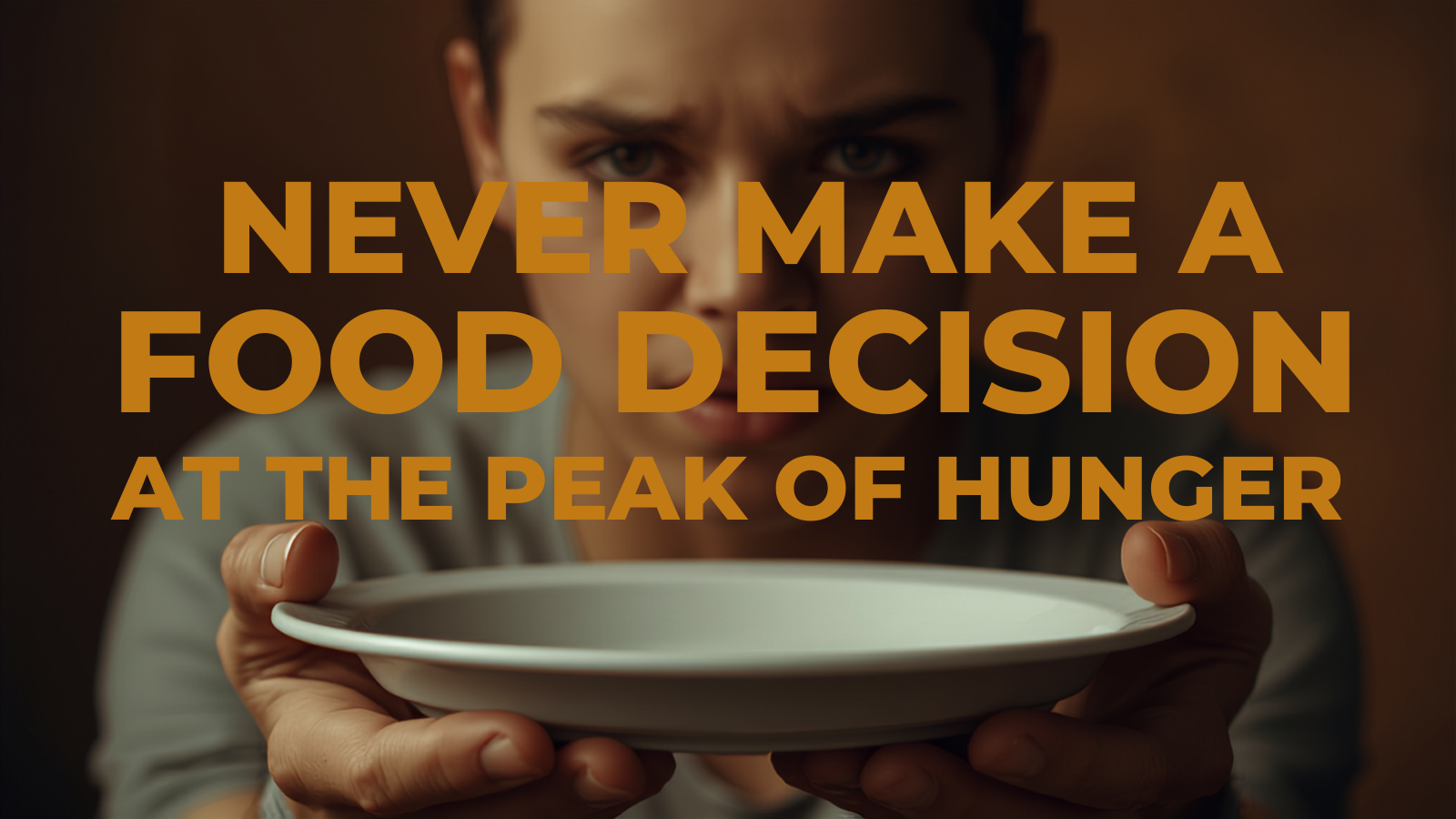
The second version of that same person is extremely hungry, tired after a long day, short on time, and standing in front of several convenient food options. Although both situations involve the same individual, the decisions made in those moments may be very different.
This helps explain why healthy eating can sometimes feel confusing. People often judge themselves entirely based on the decisions they make when hunger is already intense. They may conclude that they lack discipline or that they simply cannot control themselves around food.
However, a more useful question may be to ask why the decision was delayed until hunger became extreme. If you consistently wait until you are exhausted and very hungry before deciding what to eat, you may be placing yourself in a situation where convenience and immediate satisfaction have a significant advantage.
Meal Prep Is Also Decision Preparation
Most people associate meal preparation with cooking, but its psychological value goes beyond preparing food. Every day, people make numerous decisions involving work, relationships, responsibilities, exercise, finances, and food. Even small decisions can gradually require mental energy when they are repeated consistently.
Food decisions occur several times throughout the day. You may decide what to eat for breakfast, whether to bring or buy lunch, what to prepare for dinner, and whether you need snacks between meals. These decisions can become even more complicated when cravings, social situations, busy schedules, and unexpected changes are added to the equation.
Meal preparation can reduce some of this decision-making pressure. When food or ingredients are already available, you do not have to begin the entire process from the beginning every time hunger appears. You had already considered your options when you had more time, energy, and mental space.
Marcus eventually changed his approach. Instead of forcing himself to prepare fourteen identical meals for an entire week, he began preparing flexible ingredients. He cooked protein sources, prepared carbohydrates, washed and cut vegetables, and kept practical breakfast and snack options available.
The change was not that Marcus suddenly became perfect with food. The difference was that when hunger arrived, he no longer had to begin making every decision from zero. He had already made some of those decisions in advance, and his future self benefited from the preparation.
Hunger, Cravings, and Immediate Reward
Hunger and cravings are not always the same experience. Physical hunger is generally connected to the body’s need for food, while cravings can involve a strong desire for a specific food or eating experience. Habits, emotions, stress, environmental cues, and previous experiences can all influence cravings.
However, intense hunger can make highly rewarding foods particularly appealing. Imagine someone driving home after a long day without eating properly. They notice the smell of food from a restaurant, see an advertisement for a favorite meal, or receive a notification offering a discount on food delivery.
At that moment, the decision can become more difficult. The brain recognizes food cues, remembers previous enjoyable experiences, and notices that satisfying food is immediately available. The person may not be consciously thinking about nutritional balance because their immediate priority is simply to eat.
Meal preparation cannot eliminate every craving, and it should not become a rigid system designed to remove all spontaneity from eating. However, having satisfying and nourishing food available can reduce the likelihood that every episode of intense hunger becomes an emergency.
The goal is not to remove pleasure from food or force yourself to eat the same thing every day. The goal is to avoid allowing urgency to control every decision.

The Psychological Advantage of Planning Ahead
Planning ahead creates distance between the moment when you make a food decision and the moment when hunger becomes intense. This distance can be valuable because it gives you an opportunity to think beyond your immediate needs.
When you are not extremely hungry, you may find it easier to consider several factors at the same time. You can think about the foods you enjoy, your nutritional needs, your schedule, your budget, and the amount of time you realistically have available.
Planning can also reduce the pressure to make every food choice perfect. One of the disadvantages of highly restrictive diets is that they can create rigid rules that are difficult to maintain. When a person eventually eats something outside those rules, they may believe that they have completely failed.
Meal preparation does not have to be rigid. You can prepare flexible ingredients instead of complete meals, plan only a few meals in advance, or keep practical options available for busy days. The purpose of planning is not to control every bite of food you eat, but to make your preferred choices easier when life becomes demanding.
A healthy approach to meal preparation should reduce stress rather than create more of it. If planning food becomes another source of anxiety, guilt, or obsession, the system may need to become more flexible.
Why Waiting Until Later Can Become a Problem
There is nothing inherently wrong with deciding spontaneously what to eat. However, problems can arise when “later” consistently becomes the moment when you are extremely hungry, exhausted, stressed, or short on time.
By that point, your options may already be limited. You may have no groceries available, no prepared ingredients, and little energy to cook. The meal you intended to prepare may require more time than you have, while a convenient alternative is immediately accessible.
The decision may feel spontaneous, but the environment has already influenced the available choices. This is why planning food ahead can be understood as a practical form of self-support.
You are not assuming that your future self will always have unlimited energy, motivation, and time. Instead, you are preparing for the reality that some days will be stressful and unpredictable.
That is one of the most realistic advantages of meal preparation. You are building a system that can still work when motivation is low.
The Benefits of Meal Preparation
One of the major benefits of meal preparation is that it can support consistency. Having food or ingredients available may make it easier to eat regular meals and reduce the frequency of last-minute decisions.
Meal preparation can also improve awareness of food choices. Planning meals can make it easier to include a variety of foods and consider sources of protein, carbohydrates, fats, fruits, and vegetables. This does not require every meal to follow an identical formula, but it can encourage greater intentionality.
Another potential benefit is time management. Preparing ingredients or meals in advance can reduce the amount of time spent thinking about and preparing food every day. This can be particularly useful for people with demanding schedules.
Meal preparation may also help reduce unnecessary spending and food waste. Purchasing ingredients with a plan can make it easier to use food before it spoils and reduce repeated last-minute purchases.
Perhaps the greatest benefit is psychological. When you know that food is available, hunger does not automatically create a crisis that demands an immediate decision.
How to Stop Letting Hunger Control Every Food Decision
- The first step is to recognize when you are consistently allowing hunger to become extreme before thinking about food. You do not need to eat constantly, but understanding your typical schedule can help you plan meals in a way that is realistic for your lifestyle.
- The second step is to make practical and nourishing food easier to access. This might involve preparing ingredients in advance, keeping convenient foods available, or identifying simple meals that can be prepared quickly when time is limited.
- The third step is to prepare for the days when motivation disappears. A food system that only works when you have unlimited energy and time may not work consistently. Having realistic backup options can make healthy eating easier during stressful periods.
- The fourth step is to include foods you genuinely enjoy. A meal plan that feels like punishment is unlikely to remain sustainable. Nutrition and enjoyment can exist together, and planning ahead does not mean removing all pleasure or spontaneity from eating.
- Finally, it is important to remember that one unplanned meal does not destroy an overall pattern of healthy eating. The goal is not perfection. The goal is to create a system that makes your preferred choices easier to repeat.
Final Verdict
The real power of meal preparation is not simply about becoming more organized in the kitchen. Its deeper advantage is that it allows you to make important food decisions before intense hunger, exhaustion, stress, convenience, and immediate reward begin competing for your attention.
Planning ahead gives your future self support. It reduces the effort required to follow through on the choices you made when you had more time and mental energy to think clearly.
This does not mean that you should never eat spontaneously or enjoy food that was not part of a plan. Healthy eating should include flexibility, enjoyment, culture, family experiences, and the reality that life does not always follow a schedule.
However, if you repeatedly find yourself making food decisions when you are extremely hungry, exhausted, and surrounded by convenient options, the answer may not always be to demand more willpower from yourself. Sometimes, the more effective solution is to make the decision earlier.
You can prepare a meal, plan a few options, or simply keep practical food available for the moments when life becomes busy. These small actions can reduce the power that urgency has over your choices.
The best food decision is not always the one you make when hunger arrives. Sometimes, it is the decision you made earlier, when you had the time to think about what your body would need later.
Leave a Reply